
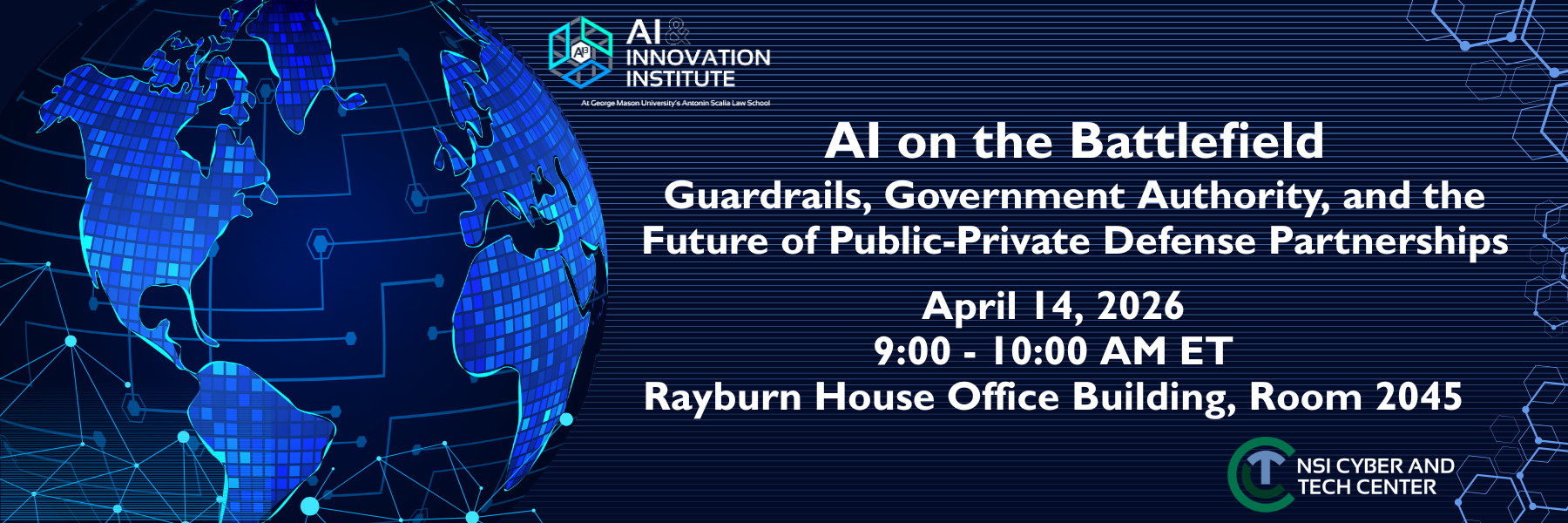
The National Security Institute hosted a discussion on the evolving relationship between artificial intelligence developers and the U.S. government as frontier AI systems become increasingly integrated into national security missions.
As AI becomes central to intelligence analysis, military planning, and operational decision-making, the United States will depend heavily on collaboration between the federal government and private-sector technology companies. Maintaining effective partnerships will be essential to ensuring that the United States can successfully integrate AI capabilities into defense and intelligence operations.
Recent developments surrounding the deployment of advanced AI systems in classified environments have surfaced broader questions about how these partnerships should function in practice. This discussion will explore the role of developer-imposed guardrails, the government’s authority over operational use once AI systems are deployed, and what durable frameworks may be needed to support long-term collaboration between government and industry as AI becomes more central to national security.
Panelists:
- Maj. Gen. (Ret.) Charles Cleveland – Senior Counselor, Palantir Technologies
- Samuel Hammond – Chief Economist, Foundation for American Innovation
- Nathan Leamer – CEO, Fixed Gear Strategies
- Katrina Mulligan – Head of National Security Partnerships, OpenAI
Moderator
- Jamil N. Jaffer – Founder and Executive Director, National Security Institute
Speakers
Maj. Gen. (Ret.) Charles Cleveland
 Charlie Cleveland is a Senior Counselor at Palantir Technologies and a Principal at Pallas Advisors. A retired Major General with over three decades of military and intelligence service, Cleveland has held operational command and senior staff positions across the national security enterprise.
Most recently in government, he served as a Senior Advisor at the Office of the Director of National Intelligence. Before that, he served as the Director of Operations and Military Deputy at the National Geospatial-Intelligence Agency (NGA) and as the Vice Director for Intelligence (J2) on the Joint Staff. He also served as Director of Strategic Communications and Spokesman for Resolute Support and U.S. Forces Afghanistan, and as the Senior Military Assistant to the Under Secretary of Defense for Intelligence.
Earlier in his career, Cleveland commanded the Joint Special Operations Intelligence Brigade at the Joint Special Operations Command (JSOC) and held multiple command and staff positions across the 75th Ranger Regiment, JSOC, and other Army units over more than two decades of service.
Cleveland is also a board member of the Vigilant Torch Association, a philanthropic organization that supports Special Operations veterans. He holds a degree from Furman University.
Samuel Hammond
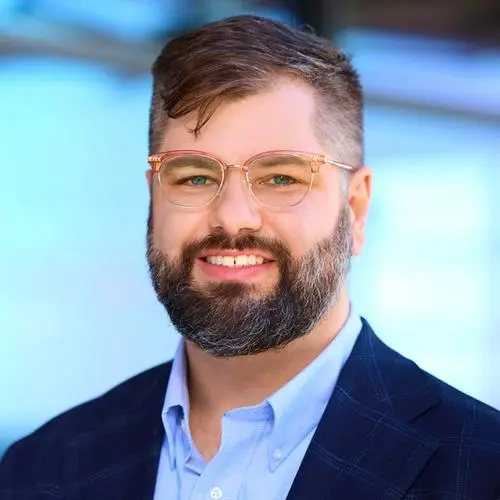 Samuel Hammond is Chief Economist at the Foundation for American Innovation, where his research focuses on artificial intelligence and the institutional impact of emerging technologies. He previously worked as the director of social policy for the Niskanen Center, where he remains a senior fellow; as an economist for the Government of Canada specializing in regional economic development; and as a graduate research fellow for the Mercatus Center at George Mason University.
Sam received a BA in Economics from Saint Mary’s University and MA in Economics from George Mason University and Carleton University.
Nathan Leamer
 Nathan Leamer is the Chief Executive Officer of Fixed Gear Strategies, a boutique consulting firm that works with partners navigating the intersection of technology and policy. He also serves as Executive Director of the Digital First Project, where he leads a community of advocates focused on expanding access to next-generation technologies and promoting innovation.
Previously, Leamer served as Vice President of Public Affairs at Targeted Victory. Prior to that, he was a Policy Advisor to Federal Communications Commission Chairman Ajit Pai, where he coordinated coalitions of advocacy organizations, think tanks, and congressional offices; advised on external affairs and policy rollout; and helped lead public relations strategy. He represented the Chairman’s office at events on Capitol Hill and at major conferences including SXSW and the State Policy Network.
Earlier in his career, Leamer was Outreach Manager and Senior Fellow at the R Street Institute, where he worked on policy issues including privacy, security, encryption, intellectual property, and the future of work. He also held roles at Generation Opportunity, the U.S. House of Representatives, and the Michigan House of Representatives, building coalitions, developing policy campaigns, and supporting legislative efforts at both the federal and state levels.
Leamer holds a B.A. in History from Calvin University.
Katrina Mulligan
 Katrina Mulligan is Head of National Security Partnerships at OpenAI, where she leads work with U.S. government partners on the safe and effective deployment of frontier artificial intelligence systems.
She operates at the nexus of technology, policy, and national security, helping leaders understand and apply emerging AI capabilities to mission-critical challenges. Before joining OpenAI, Katrina held senior roles across government and the nonprofit sector, including at the White House, the Pentagon, the Department of Justice, and the Intelligence Community. In those positions, she managed the White House’s response to the Snowden disclosures, supported counterterrorism efforts following Benghazi and the Boston Marathon bombings, and oversaw Special Operations policy.
At OpenAI, she partners with national security agencies to explore how AI can advance outcomes while reinforcing safety and governance. A frequent speaker on the implications of AI for strategy, security, and society, Katrina is committed to ensuring that these powerful technologies are developed and deployed to benefit humanity.
Jamil N. Jaffer
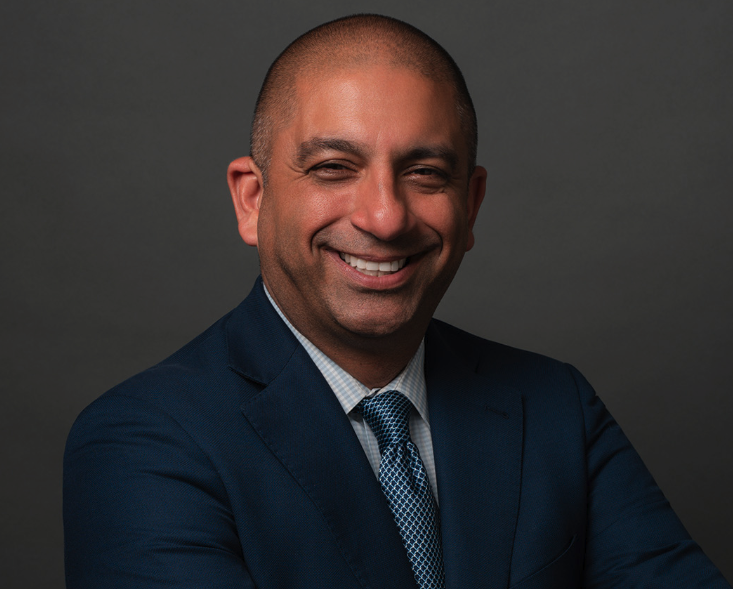
Jamil N. Jaffer is the Founder and Executive Director of the National Security Institute (NSI) at George Mason University’s Antonin Scalia Law School, where he also serves as an Assistant Professor of Law, Director of the National Security Law and Policy Program, and Director of the Cyber, Intelligence, and National Security LL.M. Program. He teaches courses on counterterrorism, cybersecurity, intelligence, surveillance, and national security law, including a summer program abroad with U.S. Supreme Court Justice Neil M. Gorsuch. Jamil is also affiliated with Stanford University’s Center for International Security and Cooperation and was previously a Visiting Fellow at the Hoover Institution.
Jamil is a Venture Partner at Paladin Capital Group, focusing on dual-use national security technologies, and serves on the boards of RangeForce, Tozny, and the advisory boards of U.S. Strategic Metals, Constella Intelligence, Beacon Global Strategies, and Duco. He is the Managing Director of Trigraph Caveat Capital and actively engaged with numerous civic, policy, and nonprofit organizations including the Global Cyber Alliance, Foundation for the Defense of Democracies, Greater Washington Board of Trade, and the Reagan Institute Strategy Group. He has also held board roles with the Center for Intelligence Policy and Speech First, and serves on the Executive Committee of the Federalist Society’s International Law and National Security Practice Group.
From 2015 to 2021, Jamil was a senior executive at IronNet Cybersecurity, working directly for former NSA Director Gen. (Ret.) Keith Alexander and former Zscaler COO Bill Welch. He helped grow the company from an early-stage startup through VC funding rounds and its public listing. In government, he served as Chief Counsel and Senior Advisor to the Senate Foreign Relations Committee under Chairman Bob Corker, and as Senior Counsel to the House Intelligence Committee under Chairman Mike Rogers. He played a lead role in authoring the Iran Nuclear Agreement Review Act, AUMF proposals, and the Cyber Intelligence Sharing and Protection Act. Jamil also served in the Bush Administration as Associate Counsel to the President and as Counsel to the Assistant Attorney General for National Security, where he led major initiatives in cybersecurity, FISA litigation, and counterterrorism.
Earlier in his career, Jamil served in the DOJ’s Office of Legal Policy, in private practice at Kellogg Huber, and on Capitol Hill with Congressman Bob Goodlatte. He clerked for Judge Edith H. Jones on the Fifth Circuit, then-Judge Neil Gorsuch on the Tenth Circuit, and Justice Gorsuch on the U.S. Supreme Court. A recognized thought leader, Jamil has co-authored book chapters with Gen. Keith Alexander and Gen. Michael Hayden and published widely with figures like Michael Mukasey and Matt Olsen. He has testified before Congress on cybersecurity and China, advised the Cyberspace Solarium Commission, and appeared in major media outlets including CNN, Fox News, NPR, and The Wall Street Journal. Jamil holds degrees from UCLA (B.A., cum laude), the University of Chicago Law School (J.D., with honors), and the U.S. Naval War College (M.A., with distinction).